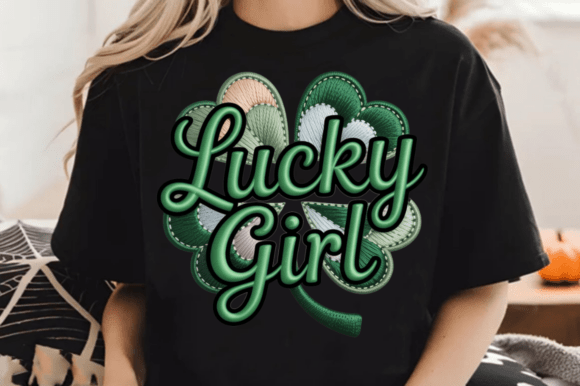
Lucky Girl St Patrick’s Day Embroidery Review
As an experienced embroidery designer who has spent countless weekends setting up booths at craft fairs and handmade markets, I know that the difference between a product that gathers dust and one that flies off the table often comes down to the design itself. Today, I am reviewing a specific digital asset titled Lucky Girl St Patrick’s Day Embroidery. While the listing describes it as part of a "Freebies" category under Graphics, offering a high-resolution PNG file with a transparent background, my job is to look past the file specs and determine if this design translates into a profitable, high-quality handmade product for your business.
First Impressions: Is This Design Market-Ready?
When I first pull up the Lucky Girl St Patrick’s Day Embroidery graphic on my screen, the immediate vibe is festive and playful. The title suggests a modern take on the traditional Irish holiday, likely appealing to a younger demographic or those looking for something slightly more whimsical than standard shamrocks and leprechauns. For a craft fair booth, visual impact is everything. A design needs to stop a passerby in their tracks from three feet away. If this machine embroidery design features bold lines and clear shapes, it has the potential to be a strong focal point. However, if the "Lucky Girl" concept relies on tiny facial details or intricate script, we need to proceed with caution before committing to production.
The description notes a resolution of 300 dpi and dimensions of 4500 x 4500 PX. In the world of digital graphics, this is excellent quality. It means the edges should remain crisp when scaled up for larger projects like tote bags or aprons. As an Etsy seller or boutique maker, you want your finished product to look professional, not pixelated. High resolution ensures that when you convert this digital embroidery file into a stitch-out, the digitizing process can capture the nuances without losing clarity.
Product Applications: Where Does It Shine?
Not every design works on every item. When preparing my table display for the weekend market, I evaluate where Lucky Girl St Patrick’s Day Embroidery would stand out most effectively. Here is how I envision this design performing across various handmade products:
- Tote Bags: This is a classic application. A large-scale version of the design on a natural canvas tote bag creates a perfect tote bag design that screams "eco-friendly festival." The contrast of bright green thread against beige canvas usually sells well.
- Apron Embroidery: Kitchen textiles are huge during the holidays. Placing this design on the bib of a linen apron adds a touch of personality. It feels practical yet decorative, making it a great gift item.
- Tea Towel Embroidery: These are low-cost, high-turnover items. If the design isn't too dense, a small accent on the corner of a tea towel can drive impulse buys at the booth.
- Embroidered Patches: If the design is compact enough, creating patches allows customers to add the "Lucky Girl" motif to denim jackets or backpacks. This expands your market beyond just selling finished goods.
- Caps and Pillow Covers: Curved surfaces like caps require careful digitizing. If the design is flat and simple, it works. If it has complex shading, the curve might distort the image.
Practical Selling Points and Visual Appeal
For a craft fair product to succeed, it must communicate value instantly. The Lucky Girl St Patrick’s Day Embroidery concept taps into the "lucky charm" sentiment, which is powerful during March. Customers are looking for something unique that they can’t find at big-box stores. By using this embroidery file, you offer a tactile, textured alternative to printed vinyl or heat transfer.
Photography is another critical factor. When I create printable mockups for my online shop, I need designs that photograph well. A design with good color separation and distinct outlines pops in photos. If the Lucky Girl St Patrick’s Day Embroidery has a clean composition, it will look stunning in your Etsy listings, increasing click-through rates. Furthermore, having a cohesive set of products—like matching aprons and totes featuring the same design—strengthens your brand consistency and makes your booth look curated and professional.
Production Challenges and Designer Notes
While the potential is high, there are practical hurdles to consider before you start stitching. As a professional, I always advise testing any new design assets on scrap fabric first. Here are the specific areas where you need to pay attention:
Stitch Density and Detail
If the "Lucky Girl" illustration includes fine hair details or very small lettering, these may get lost in the embroidery process. Stitch density is key; if the area is too dense, the fabric may pucker, ruining the drape of a tea towel or the fit of a cap. Always check the back of your test stitch to ensure the stabilizer is holding up.
Fabric Texture and Color
Textured fabrics like terry cloth towels or heavy denim can hide small details. Ensure your thread colors provide enough contrast against the fabric. A dark green design on a black background might disappear, while white or gold accents could make it shine. Remember, what looks good on a screen might look different on thick fabric.
Hoop Size and Stabilizer
Before you commit to a batch run, confirm the hoop size required. If the design is large, you may need a 6x10 hoop, which limits the types of items you can embroider (e.g., you can't easily hoop a small pouch). Always use the right stabilizer for the fabric type to prevent shifting and maintain the integrity of the design.
Final Verdict for the Small Shop Owner
Is Lucky Girl St Patrick’s Day Embroidery worth adding to your collection? Absolutely, provided you treat it with the care of a professional. It offers a fresh, modern twist on a seasonal staple. Whether you are producing a small shop product line for a weekend market or expanding your commercial embroidery catalog online, this design has the versatility to work across multiple mediums.
Just remember to verify the licensing terms. Even though this is listed under Freebies, some free graphics have restrictions on commercial use. If you plan to sell the finished embroidered items, ensure you have the right to do so. Once cleared, create at least one real mockup to see how the threads interact with the fabric. With proper execution, this design can become a signature piece that draws customers to your table and keeps them coming back for more.